Commercial Roof Replacement Costs for Building Owners
This guide is for commercial property owners and facility managers — not homeowners pricing a residential shingle roof. If you need residential replacement factors, see the homeowner replacement guide. For a broader overview that includes repair and maintenance planning ranges, see the 2026 NH roofing cost hub.
Commercial roof replacement is rarely a simple square-foot calculation. In New Hampshire, building owners should expect pricing to depend on roof size, system type, condition, access, tear-off needs, insulation, drainage, flashing, warranty expectations, and how the roof is used day to day.
Costs vary. Final pricing depends on roof size, system, condition, access, tear-off, insulation, drainage, warranty, and project scope. Request a quote for project-specific guidance.
Factor-Based Pricing Guide
The table below explains what drives commercial replacement scope — not invented dollar ranges. Use it to understand why quotes differ between buildings.
| Cost factor | What it affects | Why it matters |
|---|---|---|
| Roof size and layout | Material quantity, labor hours, staging | Larger roofs and irregular layouts increase membrane, insulation, and detail work |
| Roof access and safety | Setup, material handling, labor efficiency | Multi-story edges, limited staging, and occupied sites add logistics |
| Flat roof system type | Membrane, attachment, seam work, trim | TPO, EPDM, PVC, modified bitumen, and metal each involve different scopes |
| Tear-off vs. recovery | Removal depth, disposal, substrate exposure | Full tear-off reveals decking and insulation conditions hidden below |
| Insulation requirements | Thermal performance, vapor control, reroof height | Wet or compressed insulation often must be addressed during replacement |
| Drainage and scuppers | Ponding correction, overflow paths, crickets | Poor drainage can require structural or tapered insulation solutions |
| Deck / substrate condition | Repairs, cover board, attachment method | Soft or damaged decking changes scope once the roof is opened |
| Penetrations and curbs | HVAC, vents, skylights, pipe boots | Each curb and penetration adds flashing and labor |
| Parapets and edge metal | Coping, terminations, wall flashings | Edge details are common leak points on commercial roofs |
| Warranty scope | Material tier, workmanship terms on qualifying work | Broader coverage may involve specific assemblies or approved details |
| Business disruption / scheduling | Phasing, night work, tenant coordination | Occupied buildings may need staged sections or off-hours work |
No two commercial buildings share the same scope. A written assessment is the practical way to move from factors to a project-specific estimate.
What Drives Commercial Replacement Pricing?
These factors commonly affect commercial roof replacement quotes in New Hampshire:
- Total roof area and layout complexity
- Existing roofing system and number of layers to remove
- Substrate or decking condition
- Insulation and vapor barrier needs
- Drainage design, scuppers, and ponding correction
- Roof penetrations such as HVAC, vents, and skylights
- Parapet walls, edge metal, and flashing details
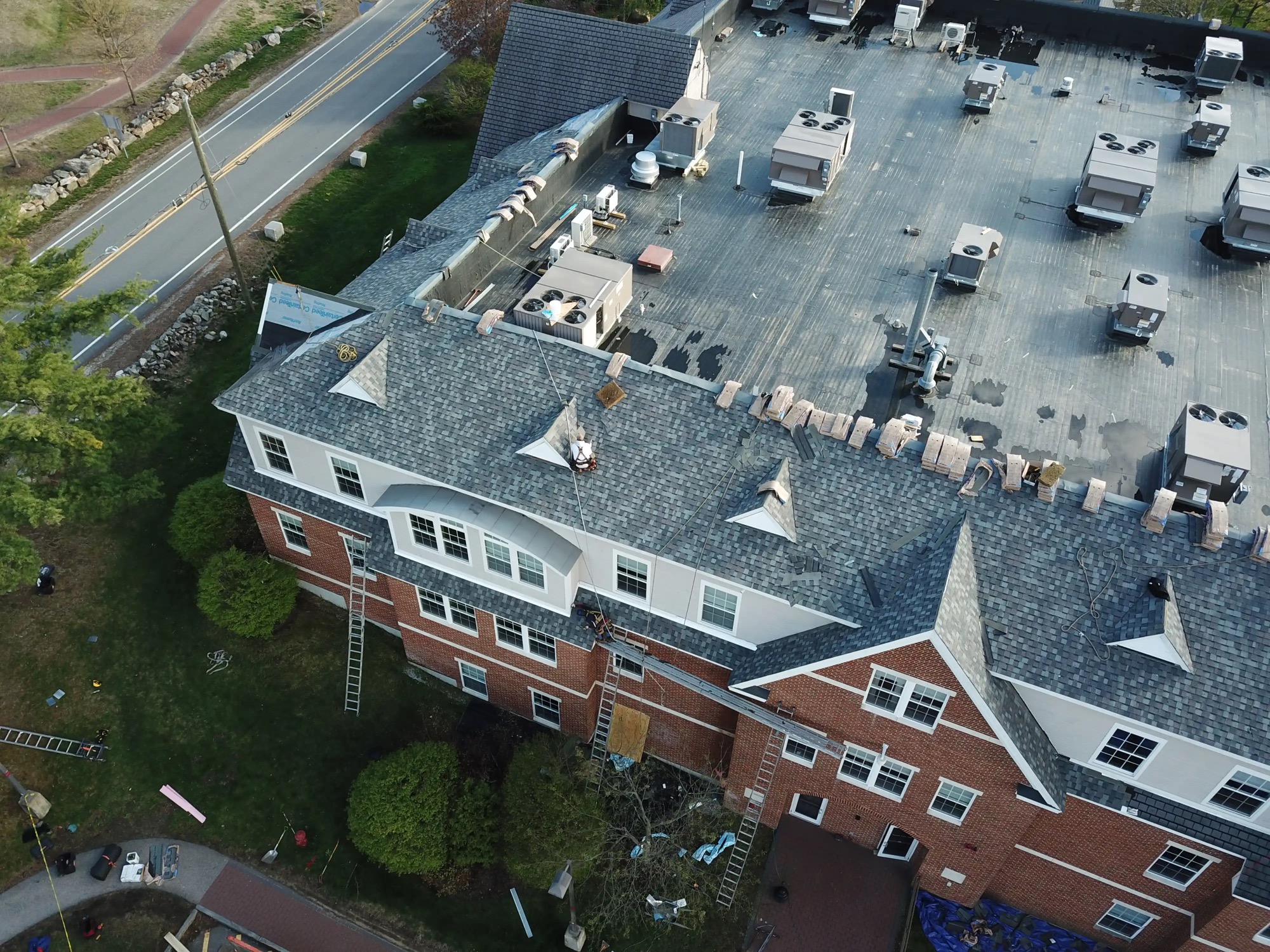
- Building access, safety, and occupied-building logistics
- Seasonal timing and weather exposure
- Warranty and workmanship expectations on qualifying work
Roof Size, Access, and Staging
Square footage is only the starting point. A wide, low warehouse with clear staging access presents different logistics than a downtown retail building with limited delivery space and pedestrian traffic below.
Building owners should share:
- Where materials can be staged
- Whether rooftop HVAC shutdown windows are limited
- Whether tenants or customers will be on site during work
- Whether interior protection is needed below active work zones
Flat Roof System Type
TPO and EPDM single-ply membranes
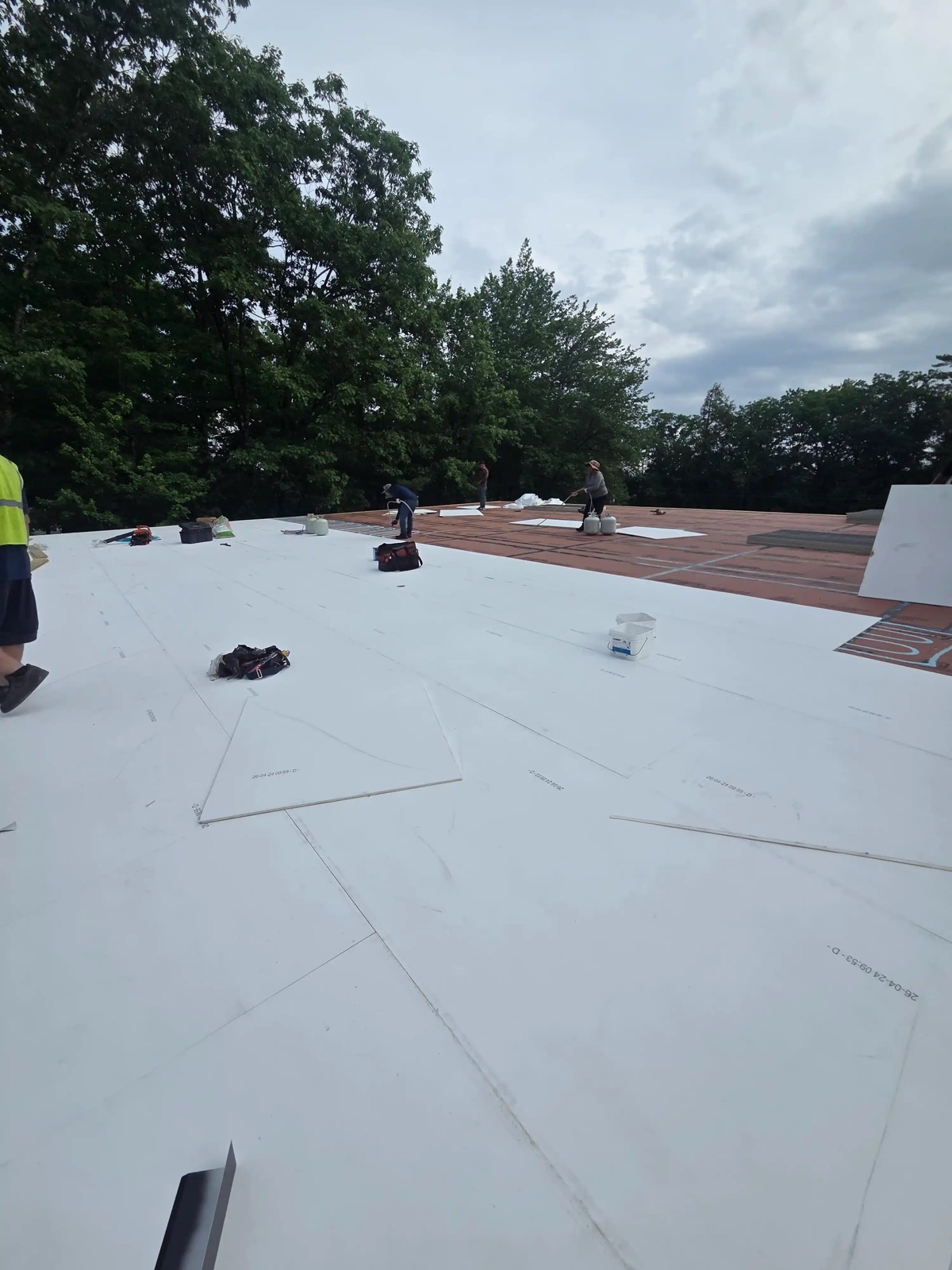
Single-ply systems are common on low-slope New Hampshire commercial buildings. Pricing reflects membrane type, attachment method, seam work, insulation board, cover board, and how well the roof drains.
PVC and specialty membranes
PVC and other specialty membranes may be selected for chemical exposure, heat-welded seams, or specific building requirements. Material and detail work can differ from standard TPO or EPDM scopes.
Modified bitumen and built-up roofing
Older commercial roofs may use modified bitumen or built-up assemblies. Replacement scope may include removing multiple layers and addressing long-term moisture issues hidden below the surface.
Commercial metal roofing
Some commercial properties use standing seam or structural metal systems. Replacement pricing reflects panel type, underlayment, trim, and whether the project is a full system change or targeted section work.
Tear-Off, Recovery, Insulation, and Hidden Conditions
A commercial replacement quote should clarify what happens after the existing roof is opened up. Wet insulation, damaged decking, failed fasteners, and outdated drainage details can change scope quickly.
Tear-off exposes substrate conditions and often reveals wet insulation that must be addressed before a new system is installed.
Recovery — installing a new system over an existing one where appropriate — may reduce tear-off labor but is not suitable for every roof. Building owners should understand the tradeoffs for their specific building.
Building owners benefit from quotes that explain:
- Whether full tear-off is included
- How substrate repairs are handled if found during the project
- Whether insulation is being replaced or supplemented
- How edge metal, coping, and wall flashing are addressed
Drainage, Scuppers, and Ponding
Drainage design affects both performance and replacement scope. Persistent ponding may require tapered insulation, crickets, or drain modifications — not just a new membrane over the same low spots.
Scupper and overflow conditions matter in New Hampshire melt cycles. Clogged or undersized drainage paths can stress seams and flashings even on a newly installed system if the underlying drainage problem is not corrected.
Warranty Scope and Documentation
Commercial roof warranties vary by manufacturer, system assembly, and contractor workmanship terms on qualifying work. Building owners should review:
- What the material warranty covers
- Whether workmanship terms apply to the proposed installation
- What maintenance or inspection requirements may affect coverage
- How rooftop modifications after installation are documented
This guide does not promise specific warranty outcomes. Coverage depends on the system selected, installation details, and manufacturer requirements.
Business Disruption and Scheduling
Replacement on an occupied building often requires phasing. Retail hours, warehouse operations, school calendars, and tenant notices can all influence:
- Whether the roof is replaced in sections
- Whether work moves to evenings or weekends
- How long HVAC curbs remain accessible
- How interior leak risk is managed during tear-off
Quotes that address staging and phasing are easier to evaluate than lump-sum numbers with no logistics plan.
Repair, Restoration, or Full Replacement?
Not every aging commercial roof needs immediate full replacement. Coatings, targeted repairs, or maintenance plans may be appropriate when the membrane and substrate are still serviceable.
Replacement is more often practical when:
- Leaks are widespread or difficult to trace
- Membrane failure is systemic rather than isolated
- Ponding and drainage problems persist after maintenance
- Repair spending is rising year over year
- The roof is near the end of its expected service life
How to Compare Commercial Roofing Quotes
Look beyond the bottom-line number. Two quotes can differ because of material quality, tear-off scope, flashing detail, drainage corrections, cleanup practices, and what is excluded.
Helpful comparison questions include:
- What roofing system is being proposed and why?
- Is tear-off included, and to what depth?
- How are insulation and decking repairs handled?
- What warranty or workmanship terms apply to qualifying work?
- Who is responsible for permits, disposal, and site protection?
- How will phasing affect building operations?
Planning a Commercial Roof Replacement in New Hampshire
Northpoint Roofing helps commercial property owners across New Hampshire evaluate roof condition and plan practical next steps. Whether you manage a retail building, office property, warehouse, or multifamily site, a professional assessment can clarify whether repair, restoration, or replacement is the better path.
Frequently Asked Questions
How much does commercial roof replacement cost in New Hampshire?
Costs vary significantly by roof size, system type, tear-off requirements, insulation, drainage, access, and building use. There is no single price that fits every commercial building. A site assessment and written scope are the practical way to understand project cost.
What commercial roofing systems cost more to replace?
Project cost depends on the system selected, not just the membrane name. TPO, EPDM, PVC, modified bitumen, metal, and coated systems each involve different material, labor, flashing, and detail work. The right system should match drainage, use, and long-term goals — not upfront cost alone.
Does tear-off increase commercial replacement cost?
Yes. Removing existing layers, disposing of old materials, repairing wet or damaged decking, and bringing insulation or vapor barriers up to the project plan can add scope. A roof that looks intact from the ground may still need substrate work once opened up.
When should a building owner request a commercial roofing quote?
Request a quote when leaks recur, maintenance costs rise, ponding or membrane wear is visible, or the roof is approaching the end of its useful service life. Northpoint Roofing serves commercial properties across New Hampshire and can help you understand repair, restoration, or replacement options.
How do I get an accurate commercial roof estimate?
Share building location, roof access notes, known leaks, roof age and system if known, and photos when possible. An on-site assessment helps confirm drainage, insulation, flashing, and replacement scope before planning moves forward.
Does business disruption affect commercial roof replacement planning?
Yes. Occupied buildings, retail hours, tenant access, HVAC shutdown windows, and delivery schedules can influence phasing and timing. A practical quote should account for how work will be staged around daily operations.
William Anderson Jr.
Owner / President, Northpoint Roofing, LLC
William Anderson Jr. is the Owner and President of Northpoint Roofing, LLC, a family-owned roofing company serving New Hampshire.
View author profile