TPO and EPDM Are Both Common — But Not Interchangeable
On low-slope commercial buildings across New Hampshire, TPO and EPDM are two of the most discussed single-ply membranes. Property owners often want a simple winner. In practice, the better system depends on roof design, drainage, insulation, foot traffic, and how the roof will be maintained.
TPO Roofing Overview
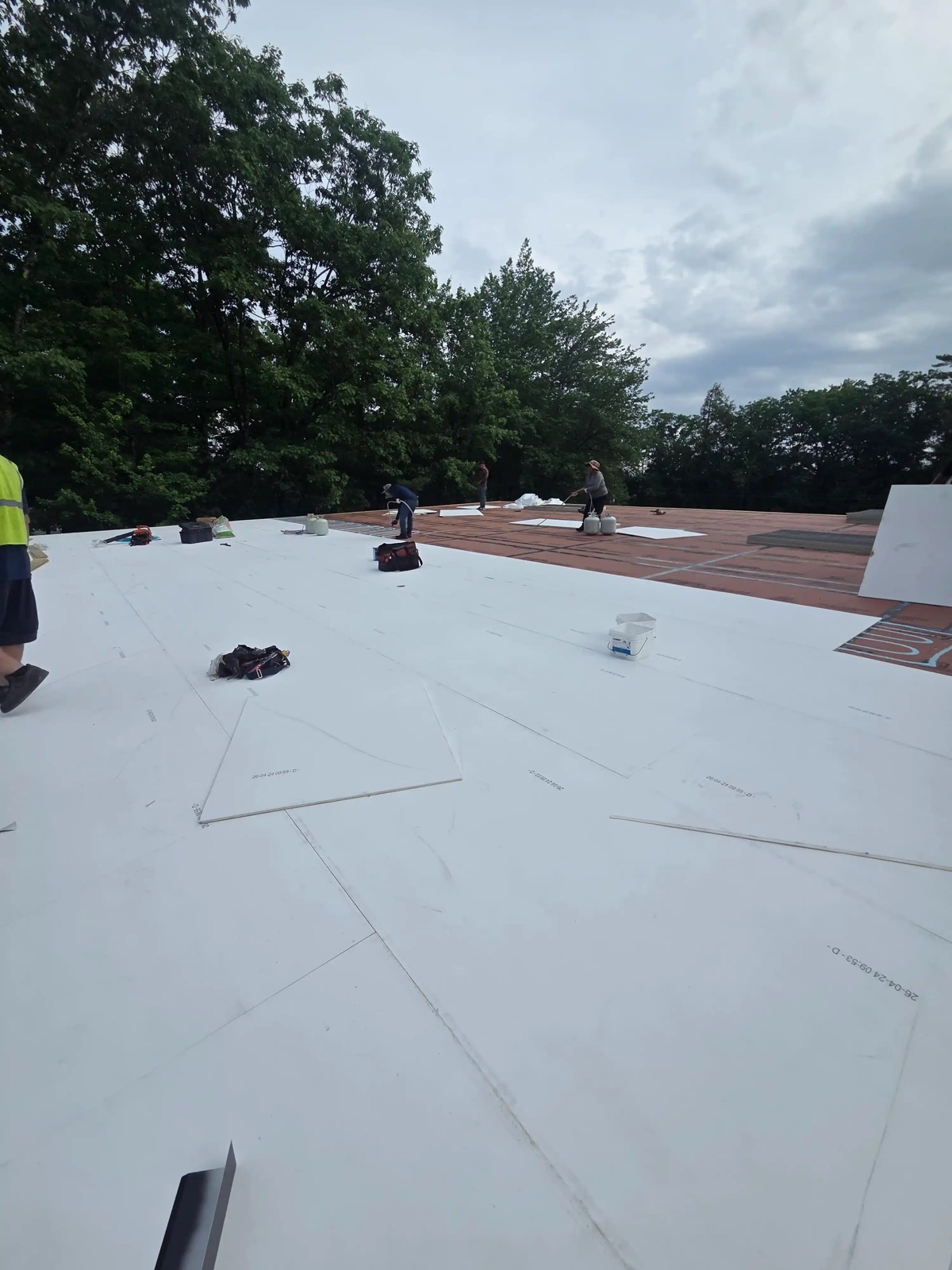
TPO membranes are often selected for heat-welded seams and white surface options. On many projects, building owners consider TPO when they want a single-ply system with welded seam continuity and a clean commercial roof appearance.
TPO considerations
- Seam welding quality and inspection matter
- Attachment method should match wind and building requirements
- Insulation and cover board planning affects performance
- Drainage and ponding correction should be part of the overall scope
- Regular maintenance still matters after installation
EPDM Roofing Overview
EPDM has a long history on commercial flat roofs. It can be a practical choice when the project plan, detailing approach, and maintenance strategy fit the building.
EPDM considerations
- Seam type and flashing details are critical
- Attachment and ballast or adhered methods affect project design
- Shrinking or membrane movement should be monitored over time
- Punctures from service traffic can create leak paths if left unaddressed
- Pairing the system with good drainage is essential
Side-by-Side Comparison Topics
| Topic | Questions to ask for either system |
|---|---|
| Drainage | Does water leave the roof quickly after rain or melt? |
| Insulation | Is wet or compressed insulation being addressed? |
| Flashings | Are curbs, walls, and penetrations detailed correctly? |
| Traffic | How often is the roof walked for HVAC or service work? |
| Maintenance | Is there a plan for seasonal inspections and drain clearing? |
| Project scope | Is tear-off required, or is recover appropriate for this roof? |
Installation Quality Matters More Than the Label
Two buildings with the same membrane name can perform very differently depending on installation quality, substrate preparation, and detail work at walls, drains, and equipment curbs.
When reviewing proposals, ask how the contractor handles:
- Substrate preparation and moisture checks
- Insulation and cover board layout
- Edge metal and coping details
- Penetration flashing and curb standards
- Cleanup, protection, and post-install inspection
When Another System May Be a Better Fit
TPO and EPDM are not the only commercial options. PVC, modified bitumen, metal, and coatings may be more appropriate depending on slope, chemical exposure, building use, or restoration goals.
Next Steps for New Hampshire Property Owners
If you are comparing TPO and EPDM for a repair, recover, or replacement project, start with a roof inspection and written scope. Northpoint Roofing serves commercial customers across New Hampshire and can help you compare systems based on your building — not generic assumptions.
Frequently Asked Questions
Is TPO better than EPDM for commercial roofs?
Neither system is better in every situation. TPO and EPDM each have strengths depending on roof layout, insulation plan, seam detail, exposure, maintenance access, and how the building is used.
Which system is more common on New Hampshire commercial buildings?
Both TPO and EPDM are widely used on low-slope commercial roofs in New Hampshire. The right choice should be based on project scope and roof conditions, not popularity alone.
Do TPO and EPDM have different maintenance needs?
Both systems benefit from regular inspections, drain clearing, seam checks, and prompt repair of punctures or flashing issues. Maintenance discipline often matters more than membrane name alone.
Can either system be installed over existing roofing?
Recover options depend on local project requirements, substrate condition, moisture in existing layers, drainage, and the approved scope for the building. An inspection helps determine whether tear-off or recover is appropriate.
How do I choose between TPO and EPDM?
Request a roof assessment and compare attachment method, insulation plan, flashing details, expected maintenance, and long-term goals. Northpoint Roofing can help New Hampshire building owners review practical options.
William Anderson Jr.
Owner / President, Northpoint Roofing, LLC
William Anderson Jr. is the Owner and President of Northpoint Roofing, LLC, a family-owned roofing company serving New Hampshire.
View author profile