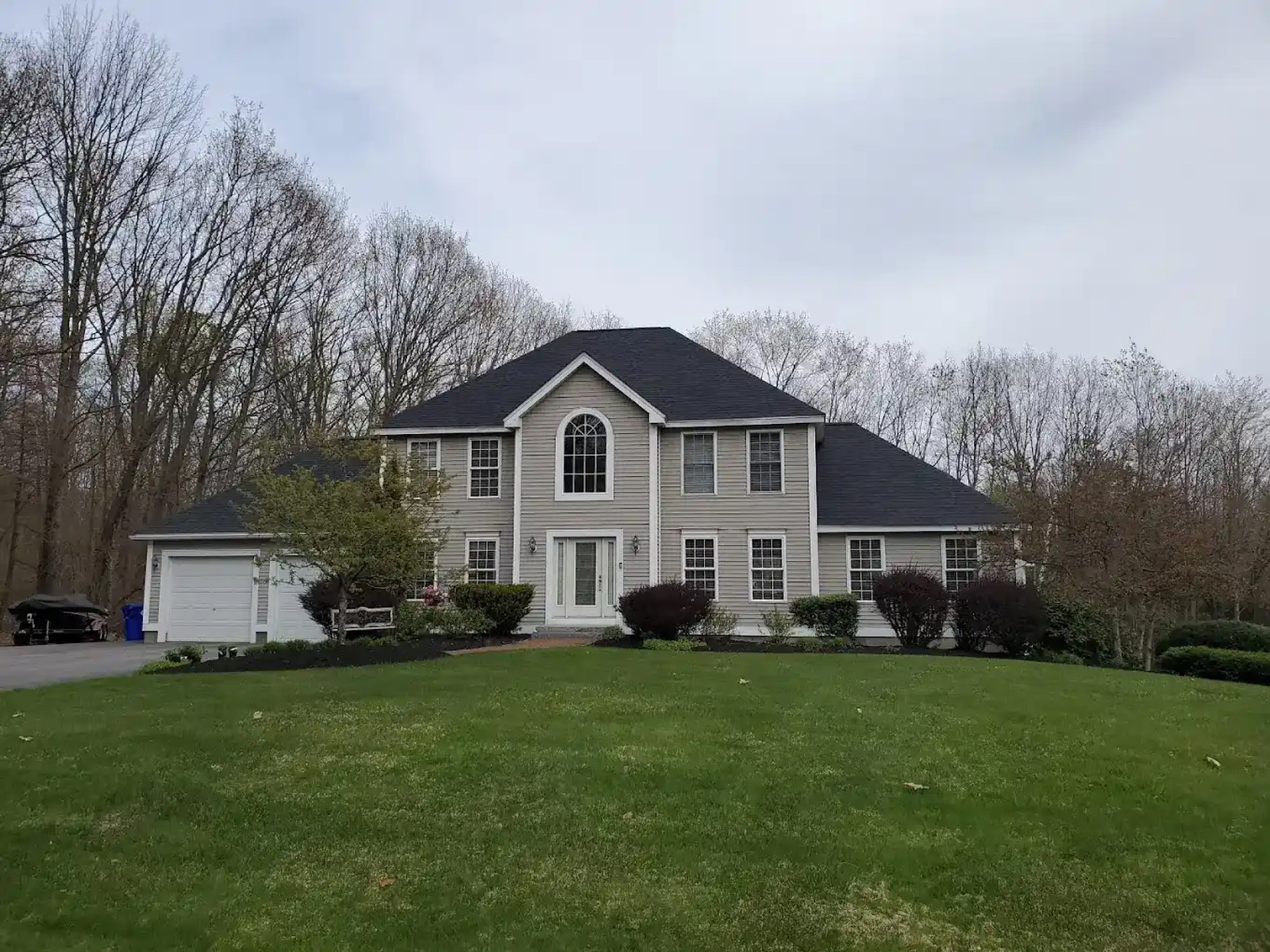
Residential Roof Replacement Pricing in New Hampshire
This guide is for homeowners only. It focuses on residential roof replacement — not commercial flat roofs, building-owner logistics, or multi-tenant properties.
Homeowners planning a roof replacement should expect costs to vary. In New Hampshire, the final number depends on roof size, pitch, roofing material, tear-off needs, decking condition, ventilation, flashing around chimneys and penetrations, ice-and-water protection, and how complex the roofline is.
Costs vary. Replacement pricing depends on roof size, material, condition, access, tear-off, ventilation, flashing, and project scope. Request a quote for an estimate tied to your home.
For a broader overview that also covers commercial roofing, repair pricing, and maintenance planning ranges, see the 2026 NH roofing cost overview.
Major Cost Factors for NH Homeowners
Roof size and layout
Larger roofs require more material and labor. Complexity matters too — hips, valleys, dormers, and multi-level rooflines add detail work beyond simple square footage.
Simple rooflines — basic gable or hip roofs with few penetrations — typically involve less flashing and labor than homes with multiple dormers, intersecting roof planes, or split-level transitions.
Complex rooflines — multiple valleys, turrets, low-slope sections tied to steep slopes, or extensive skylight and chimney detail — add labor, flashing, and staging that affects project scope even when total square footage stays similar.
Roofing material
Asphalt shingles are a common choice for many New Hampshire homes. Metal, slate, and other systems may involve different material costs, installation methods, and long-term maintenance expectations.
Tear-off and disposal
Removing existing shingles or layers, disposing of old material, and inspecting the deck below are standard parts of many replacement projects. Hidden decking damage can add scope once the old roof is removed.
Ventilation and attic performance
Proper ventilation supports roof performance in New Hampshire’s freeze-thaw cycles. Ridge vents, soffit ventilation, and related corrections may be part of a complete replacement scope.
Flashing and roof details
Chimneys, sidewall flashing, pipe boots, skylights, and edge metal all affect how well a new roof performs. Cutting detail work out of a quote can create problems later.
Season and access
Winter weather, snow load, staging access, and landscaping protection can influence scheduling and project logistics even when material prices stay the same.
Asphalt Shingles vs. Metal Roofing — Cost Factors
Most New Hampshire homeowners compare asphalt shingles first. Metal roofing is a common alternative for homes where longevity, snow shedding, or architectural style matters.
| Factor | Asphalt Shingles | Metal Roofing |
|---|---|---|
| Typical upfront cost | Often lower for many standard home sizes | Often higher due to material and trim detail |
| Installation complexity | Familiar scope for most residential crews | Requires panel layout, trim, and fastening detail |
| Weight and structure | Lighter; suits many existing roof structures | Heavier; structure should be reviewed for suitability |
| Maintenance expectations | Periodic inspection; localized repairs possible | Durable; fewer shingle-style replacements over time |
| NH weather performance | Common choice with proper underlayment and ice protection | Snow shedding and wind resistance can be advantages on some sites |
| Best fit | Many standard homes and budget-conscious replacements | Long-term ownership, specific architecture, or performance goals |
This table compares cost factors, not fixed prices. Actual quotes depend on roof size, pitch, access, tear-off, and project scope.
Roof Pitch, Access, and Safety
Steeper roofs require more labor time, staging, and safety measures. A moderate-pitch ranch and a steep colonial with multiple stories can have similar square footage but very different installation logistics.
Access also matters:
- Driveway and yard space for material staging
- Landscaping and fence protection
- Distance from the ground to the eave
- Whether the home has finished rooms directly below the work zone
These factors affect how efficiently a crew can work — and what a complete replacement scope should include.
Tear-Off Depth and Decking Condition
Many residential replacements include removing existing shingles down to the deck. What happens next depends on what the crew finds:
- Sound decking — new underlayment and shingles can proceed as planned
- Localized soft spots — targeted decking repairs may be needed before reroofing
- Widespread moisture damage — can expand scope once the old roof is opened up
Quotes that explain how decking repairs are handled — if found during tear-off — are easier to compare than quotes that leave substrate work undefined.
Ventilation, Flashing, and Ice-and-Water Protection
New Hampshire winters make these details especially important for residential roofs.
Ventilation — balanced intake and exhaust helps manage attic temperature and moisture. Replacement is often the right time to correct ventilation that was shortchanged on a prior roof.
Flashing — chimneys, sidewalls, pipe boots, skylights, and valleys are common leak points. Quality flashing work at replacement helps prevent callbacks after the first freeze-thaw cycle.
Ice-and-water protection — membrane at eaves, valleys, and vulnerable transitions helps guard against ice dam backup and wind-driven rain. Scope varies by roof design and site exposure.
None of these are optional “nice-to-haves” on every home — but they are cost factors that separate a complete replacement from a minimum-scope reroof.
New Hampshire Weather Considerations
Freeze-thaw cycles, heavy snow, ice dams, and spring rain all stress residential roofs. Homeowners budgeting for replacement should think about:
- Whether prior ice dam damage suggests ventilation or insulation review
- Whether the home has a history of wind damage at ridges and eaves
- Whether spring scheduling avoids winter tear-off complications
- Whether tree cover increases debris and moss retention on shaded slopes
Weather does not change material unit prices directly, but it affects timing, protection measures, and how urgently work should proceed after damage is found.
Simple vs. Complex Rooflines
| Roofline type | Typical scope considerations |
|---|---|
| Simple gable or hip | Fewer valleys; less flashing detail; often faster installation |
| Cross-gable or L-shaped | More valleys and wall flashing; added labor at intersections |
| Dormers and multi-level | Extra detail at transitions; staging complexity |
| Chimneys and skylights | Custom flashing; potential curb or surround work |
| Low-slope porches or additions | May need different membrane or detail treatment than main roof |
A modest square-footage roof with heavy complexity can cost more in labor and detail work than a larger simple roof.
When to Get a Roof Inspection Before Pricing
An inspection is worth scheduling before you commit to a replacement budget when:
- You are deciding between repair and full replacement
- Leaks appear in winter but the roof looks acceptable from the ground
- Shingles are aging but you are unsure how much life remains
- You are comparing multiple estimates with very different scopes
- Storm damage is present and insurance documentation may be needed
An inspection does not replace a written replacement quote, but it helps confirm what the project should include before numbers are compared.
Asphalt Shingle Replacement Considerations
For many homes, asphalt shingles remain the most practical replacement option. Homeowners comparing shingle proposals should look at:
- Shingle weight and wind-resistance rating appropriate for the site
- Underlayment and ice-and-water protection at vulnerable areas
- Starter strip, ridge, and ventilation components
- Flashing quality at walls, chimneys, and penetrations
- Tear-off depth and decking repair allowances
Metal, Slate, and Alternative Residential Systems
Some New Hampshire homes are better suited to metal or slate roofing based on architecture, exposure, or long-term ownership goals. These systems may have different upfront costs and maintenance expectations than asphalt shingles.
The right choice depends on the home, roof structure, neighborhood context, and how long you plan to keep the property — not trend alone.
What a Homeowner Should Share When Requesting a Quote
Helpful details for an accurate estimate include:
- Home location and roof access notes
- Known leaks, stains, or storm damage
- Approximate roof age and current material
- Photos of problem areas if available
- Whether you are comparing repair, partial replacement, or full replacement
Repair vs. Replacement Before You Budget
If the roof is relatively young and damage is isolated, repair may still make sense. Replacement is often more practical when:
- Leaks keep returning in different areas
- Shingles are curling, missing, or granulating heavily
- Decking feels soft or sagging in sections
- The roof has outlived its expected service life
- You want a more dependable long-term solution
Getting a Practical Replacement Estimate
Northpoint Roofing serves homeowners across New Hampshire from its Goffstown headquarters. A roof inspection and written scope can help you understand whether replacement is the right next step and what the project should include.
Frequently Asked Questions
How much does a residential roof replacement cost in New Hampshire?
Costs vary based on roof size, pitch, material, tear-off requirements, ventilation, flashing, decking condition, and access. There is no one-size-fits-all statewide price. An on-site assessment helps determine a realistic project scope and estimate.
What is the most common residential roofing material in New Hampshire?
Asphalt shingles are among the most common residential roofing choices in New Hampshire because they balance upfront cost, style options, and practical performance for many home types. Metal, slate, and other systems may be appropriate depending on architecture and goals.
Why do roof replacement quotes differ so much?
Quotes can differ based on material grade, tear-off depth, ventilation work, flashing detail, cleanup, warranty coverage on qualifying work, and how thoroughly the roof was inspected. Comparing scope is as important as comparing price.
Does roof pitch affect replacement cost?
Yes. Steeper roofs often require more labor, staging, and safety considerations. Complex rooflines with dormers, valleys, chimneys, and skylights also add detail work that affects project scope.
Should I repair or replace my roof to save money?
Repair may cost less upfront, but repeated repairs on an aging system can add up. If leaks are recurring, shingles are widely worn, or storm damage is extensive, replacement may be the more practical long-term option. A roof inspection can help clarify the path.
When should a homeowner get a roof inspection before pricing a replacement?
Request an inspection when you are unsure whether repair or replacement is appropriate, when leaks are hard to trace, when shingles look worn but damage is not obvious from the ground, or before budgeting for a major project. An inspection helps confirm scope before estimates are compared.

William Anderson Jr.
Owner / President, Northpoint Roofing, LLC
William Anderson Jr. is the Owner and President of Northpoint Roofing, LLC, a family-owned roofing company serving New Hampshire.
View author profile